isac322/OneDrive-SDK-java
Download
Step 1. Add the JitPack repository to your build file
Add it in your root settings.gradle at the end of repositories:
	dependencyResolutionManagement {
		repositoriesMode.set(RepositoriesMode.FAIL_ON_PROJECT_REPOS)
		repositories {
			mavenCentral()
			maven { url 'https://jitpack.io' }
		}
	}
Add it in your settings.gradle.kts at the end of repositories:
	dependencyResolutionManagement {
		repositoriesMode.set(RepositoriesMode.FAIL_ON_PROJECT_REPOS)
		repositories {
			mavenCentral()
			maven { url = uri("https://jitpack.io") }
		}
	}
Add to pom.xml
	<repositories>
		<repository>
		    <id>jitpack.io</id>
		    <url>https://jitpack.io</url>
		</repository>
	</repositories>
Add it in your build.sbt at the end of resolvers:
resolvers += "jitpack" at "https://jitpack.io"
Add it in your project.clj at the end of repositories:
:repositories [["jitpack" "https://jitpack.io"]]
Step 2. Add the dependency
	dependencies {
		implementation 'com.github.isac322:OneDrive-SDK-java:0.10.1'
	}
dependencies {
implementation("com.github.isac322:OneDrive-SDK-java:0.10.1")
} <dependency>
<groupId>com.github.isac322</groupId>
<artifactId>OneDrive-SDK-java</artifactId>
<version>0.10.1</version>
</dependency>
libraryDependencies += "com.github.isac322" % "OneDrive-SDK-java" % "0.10.1"
:dependencies [[com.github.isac322/OneDrive-SDK-java "0.10.1"]]
Readme
한국어 (korean) | English
OneDrive API for Java
purse fast, easy to use, intuitive API.
Supported Operation
- Auto login authorization check and refresh
- Fetching metadata of folder, file (by id and path)
- Folder or file's metadata (size, name, path, children list and etc.)
- Downloading file (sync and async)
- Delete, copy, move, change metadata(name, description) of folder or file
- Creating folder
- Resources that OneDrive support like image, video..
- Inquiring shared folder
- Basic RemoteItem handling
- Inquiring Drives
- Creating file and upload it (async)
- Support Microsoft Graph 1.0
- Support OneDrive for Business (not fully tested)
TODO
- Searching file or folder (by name or content)
- Sharing folder or file
- Documentation
- Support custom redirect url when login
- REST-api response error handling
- JRE6 version
- HTTPS GZIP support for synchronized operation
Environment
- JRE7
Dependency
These are already included in gradle configuration file 'build.gradle'.
Build
jar files will be located on build/libs after build
Windows
gradlew.bat build
Linux, MacOS
./gradlew build
if gradle is installed in your computer
gradle build
Simple example
You can see little bit more complicated examples in TestCode.java
1. Construct Client object
- All OneDrive jobs are performed via
Clientobject. - A program can contain multiple different
Clientobject. - Basically
Clientobject check expiration and refresh authorization automatically. but it can be done manually. - All parameters that pass to
Client's constructor can obtain if you fallow OneDrive app instruction of authentication.
import com.bhyoo.onedrive.client.Client;

String clientId = "xxxxxxxx-xxxx-xxxx-xxxx-xxxxxxxxxxxx";
String[] scope = {"files.readwrite.all", "offline_access"};
String redirectURL = "http://localhost:8080/";
String clientSecret = "xxxxxxxxxxxxxxxxxxxxxxx";

// with login
Client client = new Client(clientId, scope, redirectURL, clientSecret);
// without login
Client client = new Client(clientId, scope, redirectURL, clientSecret, false);
client.login();

// With tokens provided from outside source
String accessToken = "<access_token>";
String refreshToken = "<refresh_token>"
String tokenType = "bearer";
long expiresIn = 0;

Client client = new Client(clientId, scope, redirectURL, clientSecret, accessToken, refreshToken, tokenType, expiresIn);
2. Folder, file fetch
- It can conduct via either ID or path.
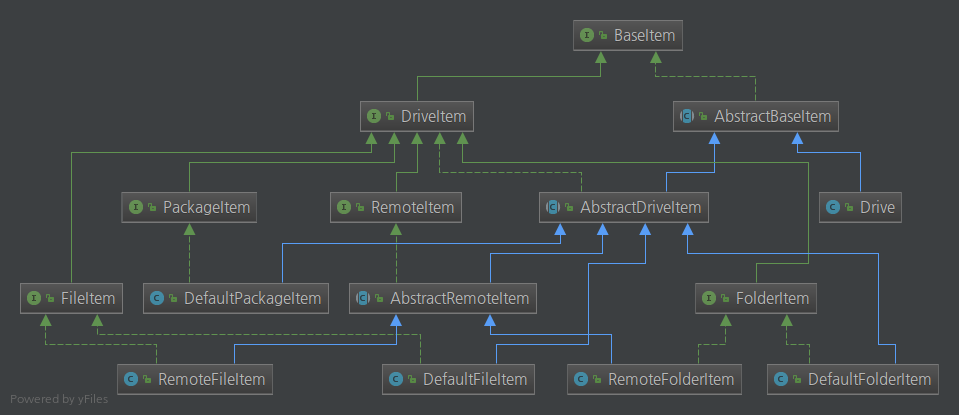
FolderItemandFileItemare represent folder and file respectively.FolderItemandFileItemare child class ofDriveItem.
import com.bhyoo.onedrive.container.items.DriveItem;
import com.bhyoo.onedrive.container.items.FileItem;
import com.bhyoo.onedrive.container.items.FolderItem;

// assume that Client object is already constructed


// get root directory
FolderItem root = client.getRootDir();


// get folder by ID
FolderItem folder = client.getFolder("XXXXXXXXXXXXXXXX!XXXX");

// get folder by path
FolderItem folder1 = client.getFolder(new PathPointer("/{item-path}"));

// get file by ID
FileItem file = client.getFile("XXXXXXXXXXXXXXXX!XXXX");

// get file by path
FileItem file1 = client.getFile(new PathPointer("/{item-path}/{file-name}"));

// or if you don't know whether ID is file or folder
DriveItem item = client.getItem("XXXXXXXXXXXXXXXX!XXXX");

// or if you don't know whether path is file or folder
DriveItem item1 = client.getItem(new PathPointer("/{item-path}"));
3. get children of a folder
FolderItemareIterable. (it will returns child asDriveItem)- Basically if
FolderItemobject is fetched byClient's methodgetFolderorgetRootDir, the object automatically fetchs children too. (If children list is very long, it could take long time) - If you call
FolderItem's methodgetAllChildrenorgetFolderChildrenorgetFileChildren, you can getListof all children, only folder children, only file children respectively. - if you call above methods, it will load children data and cache it. so First call of those methods can take long time.
import com.bhyoo.onedrive.container.items.DriveItem;
import com.bhyoo.onedrive.container.items.FileItem;
import com.bhyoo.onedrive.container.items.FolderItem;

// assume that Client object is already constructed
FolderItem root = client.getRootDir();

DriveItem[] children = root.allChildren();
FolderItem[] folderChildren = root.folderChildren();
FileItem[] fileChildren = root.fileChildren();
4. Create folder
- It can create via either parent's
FolderItemobject orClientobject. - It will return created folder's
FolderItemobject.
import com.bhyoo.onedrive.container.items.FolderItem;
import com.bhyoo.onedrive.container.items.pointer.PathPointer;

// assume that Client object is already constructed

FolderItem root = client.getRootDir();

// create folder by parent folder object
FolderItem newFolder = root.createFolder("test");


// create folder by client with parent folder id
FolderItem newFolder1 = client.createFolder("XXXXXXXXXXXXXXXX!XXXX", "test1");

// create folder by client with parent folder path
FolderItem newFolder2 = client.createFolder(new PathPointer("/"), "test2");
5. Copy folder or file
- It can copy via either source item's object or
Clientobject.
import com.bhyoo.onedrive.container.items.*;
import com.bhyoo.onedrive.container.items.pointer.*;

// assume that Client object is already constructed

FileItem item = (FileItem) client.getItem("XXXXXXXXXXXXXXXX!XXXX");
FolderItem destination = client.getFolder("XXXXXXXXXXXXXXXX!XXXX");

// direct copy
item.copyTo(destination);
// direct copy with new name
item.copyTo(destination, "newName");

// copy by reference object
item.copyTo(destination.newReference());
// copy by reference object with new name
item.copyTo(destination.newReference(), "newName");

// copy by path string
item.copyTo(destination.getPathPointer());
// copy by path string with new name
item.copyTo(destination.getPathPointer(), "newName");

// copy by id string
item.copyTo(destination.getId());
// copy by id string with new name
item.copyTo(destination.getId(), "newName");


// using `Client`, copy by path
client.copyItem(new PathPointer("/{item-path}"), new IdPointer("XXXXXXXXXXXXXXXX!XXXX"));
6. Download file synchronously
import java.nio.file.Paths;
import com.bhyoo.onedrive.container.items.FileItem;

// assume that Client object is already constructed
FileItem file = client.getFile("XXXXXXXXXXXXXXXX!XXXX");

String path = "/home/isac322/download";

// download by system path string with original file name
file.download(path);

// download by system path string with new name
file.download(path, "newName");


// download by path object with original file name
file.download(Paths.get(path));

// download by path object with new name
file.download(Paths.get(path), "newName");


client.download(new PathPointer("/{item-path}"), Paths.get(path));
7. Download file asynchronously
- all async job use Future & Promise mechanism.
- more detail of
DownloadFuturewill explain later at wiki...
import java.nio.file.Paths;
import com.bhyoo.container.items.FileItem;
import com.bhyoo.network.async.DownloadFuture;

// assume that Client object is already constructed

FileItem file = client.getFile("XXXXXXXXXXXXXXXX!XXXX");
String path = "/home/isac322/download";

// download by path object with original file name
file.downloadAsync(Paths.get(path));

// download by path object with new name
file.downloadAsync(Paths.get(path), "newName");


DownloadFuture future = client.downloadAsync("{file-id}", Paths.get(path), "newName");

// wait until download is done
future.sync();
8. Move folder or file
- It can move via either source item's object or
Clientobject.
import com.bhyoo.onedrive.container.items.FileItem;
import com.bhyoo.onedrive.container.items.FolderItem;
import com.bhyoo.onedrive.container.items.pointer.*;

// assume that Client object is already constructed

FileItem item = client.getFile("XXXXXXXXXXXXXXXX!XXXX");
FolderItem destination = client.getFolder("XXXXXXXXXXXXXXXX!XXXX");

// direct move
item.moveTo(destination);

// move by reference object
item.moveTo(destination.newReference());

// move by path string
item.moveTo(destination.getPathPointer());

// move by id string
item.moveTo(destination.getId());


// using `Client` object, move by folder path
client.moveItem(new PathPointer("/{item-path}"), new IdPointer("XXXXXXXXXXXXXXXX!XXXX"));
9. Update folder or file's metadata & Refresh
refreshwill update all variable with fetched latest metadata.- That is, if
refreshis invoked, all variable can be changed, even if the current program did not modify the variables.
import com.bhyoo.onedrive.container.items.DriveItem;

// assume that Client object is already constructed
DriveItem item = client.getItem("XXXXXXXXXXXXXXXX!XXXX");

// change item's name and flush to server.
item.rename("new name");


// change item's description and flush to server.
item.updateDescription("blah blah");


// refresh item's all variable to latest value
item.refresh();
10. Upload file (asynchronously)
- like asynchronous downloading, it uses Future & Promise mechanism.
- more detail of
UploadFuturewill explain later at wiki...
import java.nio.file.Path;
import com.bhyoo.onedrive.network.async.UploadFuture;

// assume that Client object is already constructed

UploadFuture future;

// start to upload file
future = client.uploadFile("{remote-folder-id}", Paths.get("local-file-path"));
// wait until uploading is done
future.syncUninterruptibly();
*Item diagram