 Means88/JsBridge
Download
Step 1. Add the JitPack repository to your build file
Add it in your root settings.gradle at the end of repositories:
	dependencyResolutionManagement {
		repositoriesMode.set(RepositoriesMode.FAIL_ON_PROJECT_REPOS)
		repositories {
			mavenCentral()
			maven { url 'https://jitpack.io' }
		}
	}
Add it in your settings.gradle.kts at the end of repositories:
	dependencyResolutionManagement {
		repositoriesMode.set(RepositoriesMode.FAIL_ON_PROJECT_REPOS)
		repositories {
			mavenCentral()
			maven { url = uri("https://jitpack.io") }
		}
	}
Add to pom.xml
	<repositories>
		<repository>
		    <id>jitpack.io</id>
		    <url>https://jitpack.io</url>
		</repository>
	</repositories>
Add it in your build.sbt at the end of resolvers:
resolvers += "jitpack" at "https://jitpack.io"
Add it in your project.clj at the end of repositories:
:repositories [["jitpack" "https://jitpack.io"]]
Step 2. Add the dependency
	dependencies {
		implementation 'com.github.means88:jsbridge:1.4.0'
	}
dependencies {
implementation("com.github.means88:jsbridge:1.4.0")
} <dependency>
<groupId>com.github.means88</groupId>
<artifactId>jsbridge</artifactId>
<version>1.4.0</version>
</dependency>
libraryDependencies += "com.github.means88" % "jsbridge" % "1.4.0"
:dependencies [[com.github.means88/jsbridge "1.4.0"]]
Readme
#JsBridge
inspired and modified from this and wechat jsBridge file, with some bugs fix and feature enhancement.
This project make a bridge between Java and JavaScript.
It provides safe and convenient way to call Java code from js and call js code from java.
Demo
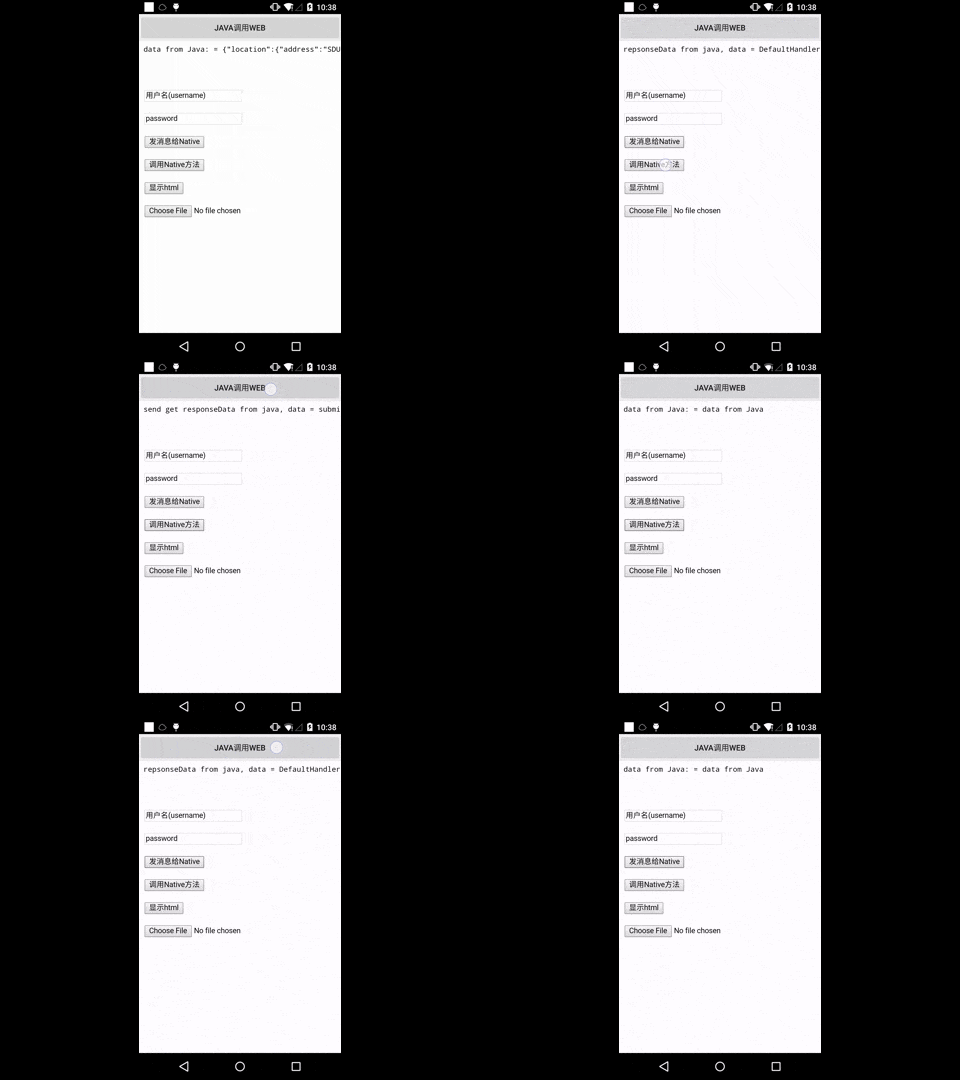
Usage
JitPack.io
I strongly recommend https://jitpack.io
repositories {
    // ...
    maven { url "https://jitpack.io" }
}

dependencies {
    compile 'com.github.means88:jsbridge:1.2.0'
}
Use it in Java
add com.github.means88.jsbridge.BridgeWebView to your layout, it is inherited from WebView.
Register a Java handler function so that js can call
    webView.registerHandler("submitFromWeb", new BridgeHandler() {
        @Override
        public void handler(String data, CallBackFunction function) {
            Log.i(TAG, "handler = submitFromWeb, data from web = " + data);
            function.onCallBack("submitFromWeb exe, response data from Java");
        }
    });
js can call this Java handler method "submitFromWeb" through:
    WebViewJavascriptBridge.callHandler(
        'submitFromWeb'
        , {'param': str1}
        , function(responseData) {
            document.getElementById("show").innerHTML = "send get responseData from java, data = " + responseData
        }
    );
You can set a default handler in Java, so that js can send message to Java without assigned handlerName
webView.setDefaultHandler(new DefaultHandler());
    window.WebViewJavascriptBridge.send(
        data
        , function(responseData) {
            document.getElementById("show").innerHTML = "repsonseData from java, data = " + responseData
        }
    );
Register a JavaScript handler function so that Java can call
    WebViewJavascriptBridge.registerHandler("functionInJs", function(data, responseCallback) {
        document.getElementById("show").innerHTML = ("data from Java: = " + data);
        var responseData = "Javascript Says Right back aka!";
        responseCallback(responseData);
    });
Java can call this js handler function "functionInJs" through:
    webView.callHandler("functionInJs", new Gson().toJson(user), new CallBackFunction() {
        @Override
        public void onCallBack(String data) {

        }
    });
You can also define a default handler use init method, so that Java can send message to js without assigned handlerName
for example:
    bridge.init(function(message, responseCallback) {
        console.log('JS got a message', message);
        var data = {
            'Javascript Responds': 'Wee!'
        };
        console.log('JS responding with', data);
        responseCallback(data);
    });
webView.send("hello");
will print 'JS got a message hello' and 'JS responding with' in webview console.
Notice
This lib will inject a WebViewJavascriptBridge Object to window object. So in your js, before use WebViewJavascriptBridge, you must detect if WebViewJavascriptBridge exist. If WebViewJavascriptBridge does not exit, you can listen to WebViewJavascriptBridgeReady event, as the blow code shows:
    if (window.WebViewJavascriptBridge) {
        //do your work here
    } else {
        document.addEventListener(
            'WebViewJavascriptBridgeReady'
            , function() {
                //do your work here
            },
            false
        );
    }
Custom Schema
Add attribute schema in WebView
<com.github.means88.jsbridge.BridgeWebView
        android:id="@+id/webView"
        android:layout_width="match_parent"
        android:layout_height="match_parent"
        means88:schema="custom" />
Add an JavaScript file in assert
// 1.js
window.WebViewJavascriptBridge = new WebViewJavascriptBridgeClass({
    CUSTOM_PROTOCOL_SCHEMA: 'custom'
});
Add JavaScript file using in Java
webView.preloadJsFiles().add("1.js");
License
This project is licensed under the terms of the MIT license.